work hub

2023

Reimagining EV Charging: How to Turn Stops into Enjoyable Experiences

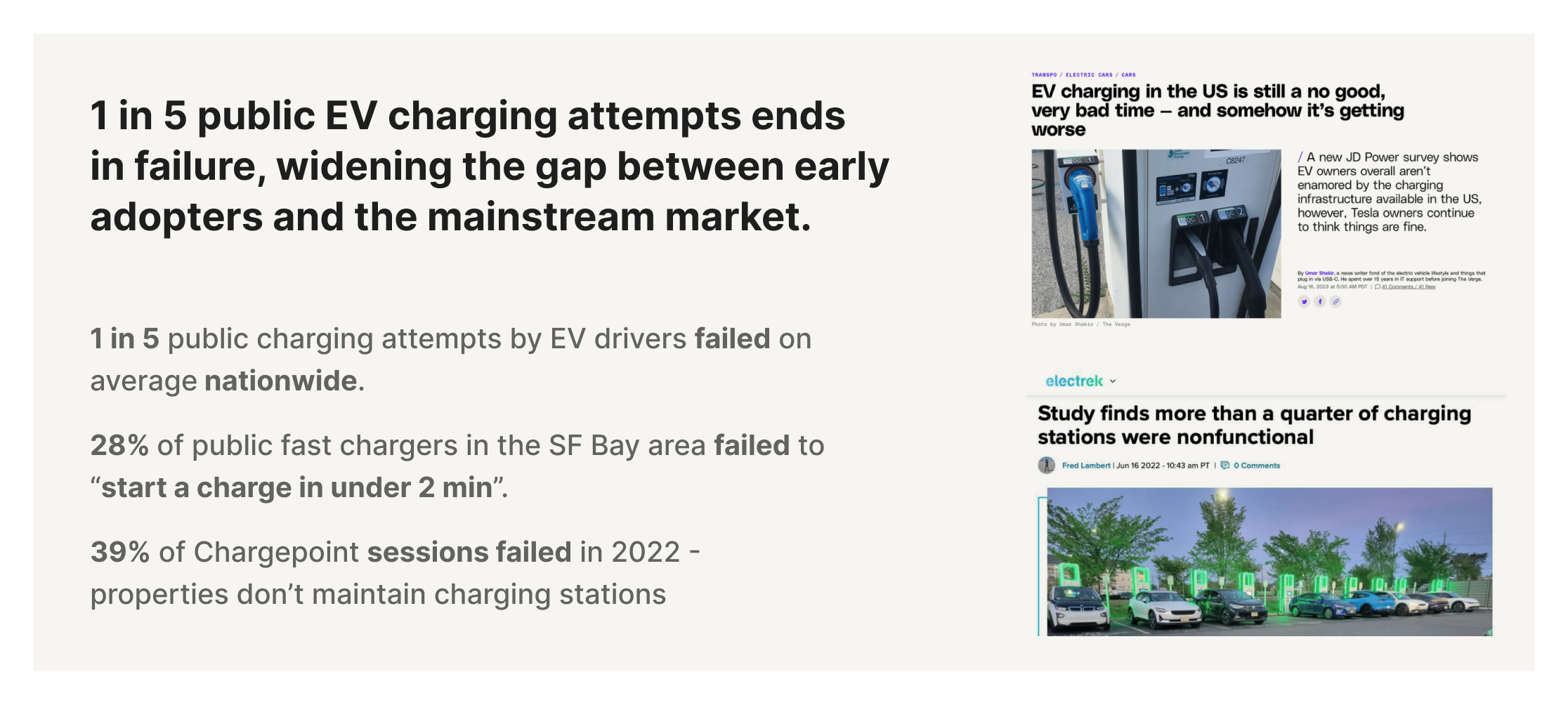
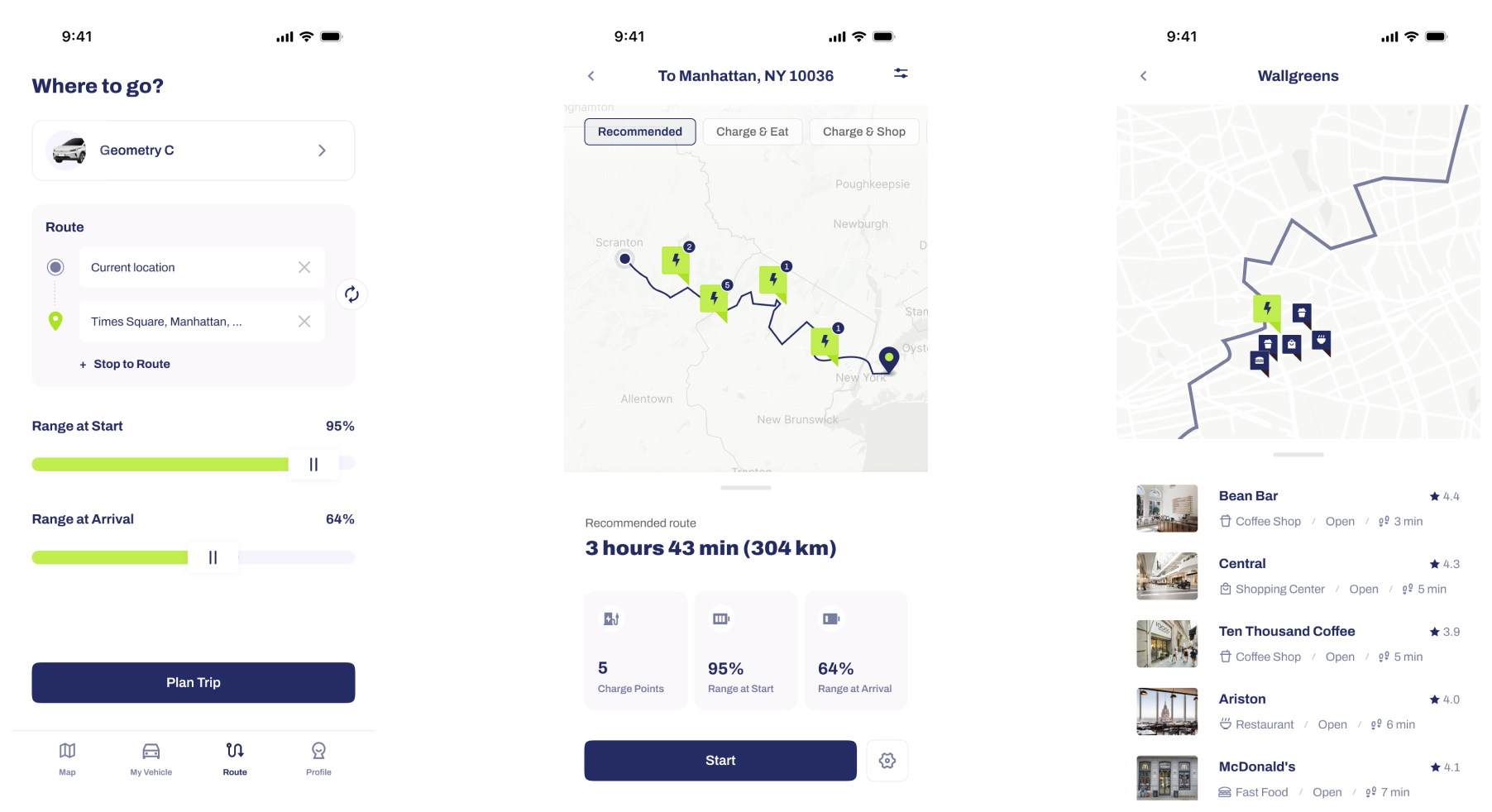
EV adoption is accelerating, yet 51% of Americans remain “unlikely” to purchase an EV due to charging anxiety. WattBuddy aims to change that. This app makes EV trips stress-free by helping drivers find available, reliable, and safe charging stations near desirable amenities.

Since its MVP launch, WattBuddy has raised $1.5 million in initial investments and garnered interest from nearly 300 companies as potential partners.

01

wattbuddy

The Journey Begins

preface

I.

challenge

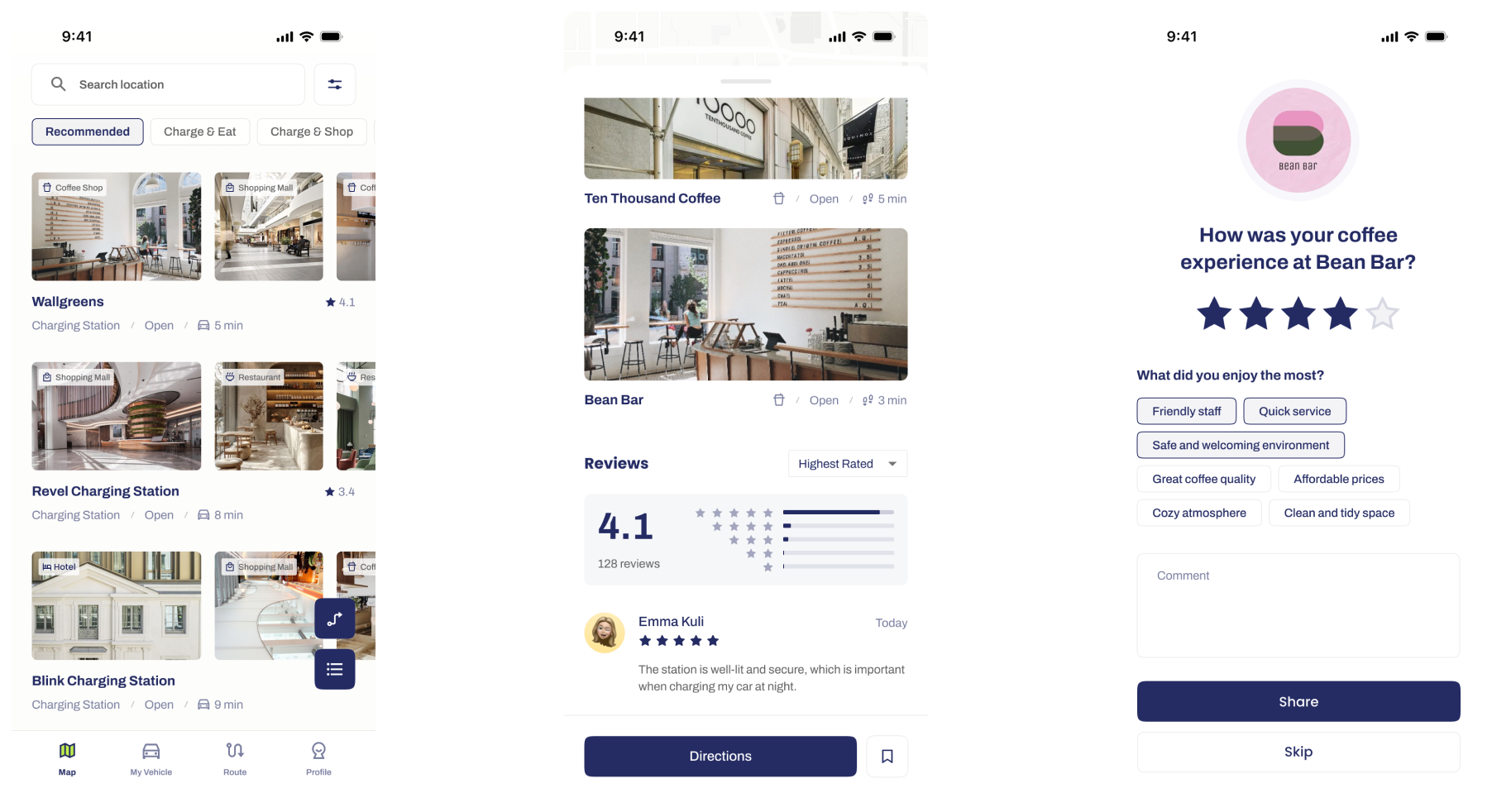
A poor driving experience is currently hindering mainstream EV adoption, and we see our mission as accelerating electric vehicle adoption by alleviating public charging anxiety. So, we aim to shift the user’s mental model from “I need to stop in order to charge” to “I charge since I had to stop” – instead of searching for chargers, what if users could discover new restaurants or coffee shops that also have convenient, reliable charging options?

II.

approach

Our design approach followed a phased development process aligned with the product roadmap, ensuring each stage addressed the specific needs of EV drivers. Initially, we prioritized core features like charging station search and route optimization, integrating real-time data via APIs to ensure accurate, up-to-date information.As the project progressed, we focused on refining more advanced features, including reliability scoring and real-time charger availability, based on continuous user feedback. Collaboration with data acquisition teams allowed seamless integration of APIs like PlugShare and ensured compliance with NEVI standards, delivering comprehensive and accurate data to users.To ensure long-term scalability, we explored AI/ML solutions for charging availability prediction and smart charging, laying the groundwork for future growth. Our structured, iterative approach ensured each milestone contributed measurable value, helping WattBuddy emerge as an attractive solution for both investors and companies within the expanding EV ecosystem.

III.

my role

I led the design of the WattBuddy app, collaborating with a junior designer to craft an intuitive and user-friendly experience tailored to EV drivers. My focus was on addressing key challenges such as charging anxiety - one of the major barriers to EV adoption - through thorough research and insights. By analyzing user feedback, conducting usability tests, and identifying key market trends, I contributed to creating a solution that not only enhances the EV driving experience but also stands out as a trusted partner in the evolving EV ecosystem.

02

wattbuddy

shaping the vision

I.

ev ecosystem

To kick off my work on the EV charging app, I immersed myself in the EV industry by analyzing recent reports, exploring YouTube resources, and engaging with thought leaders on LinkedIn. This provided me with a solid foundation in the business model and industry landscape, and using GPT has helped me refine subtle details of the big picture.

II.

competitors analysis

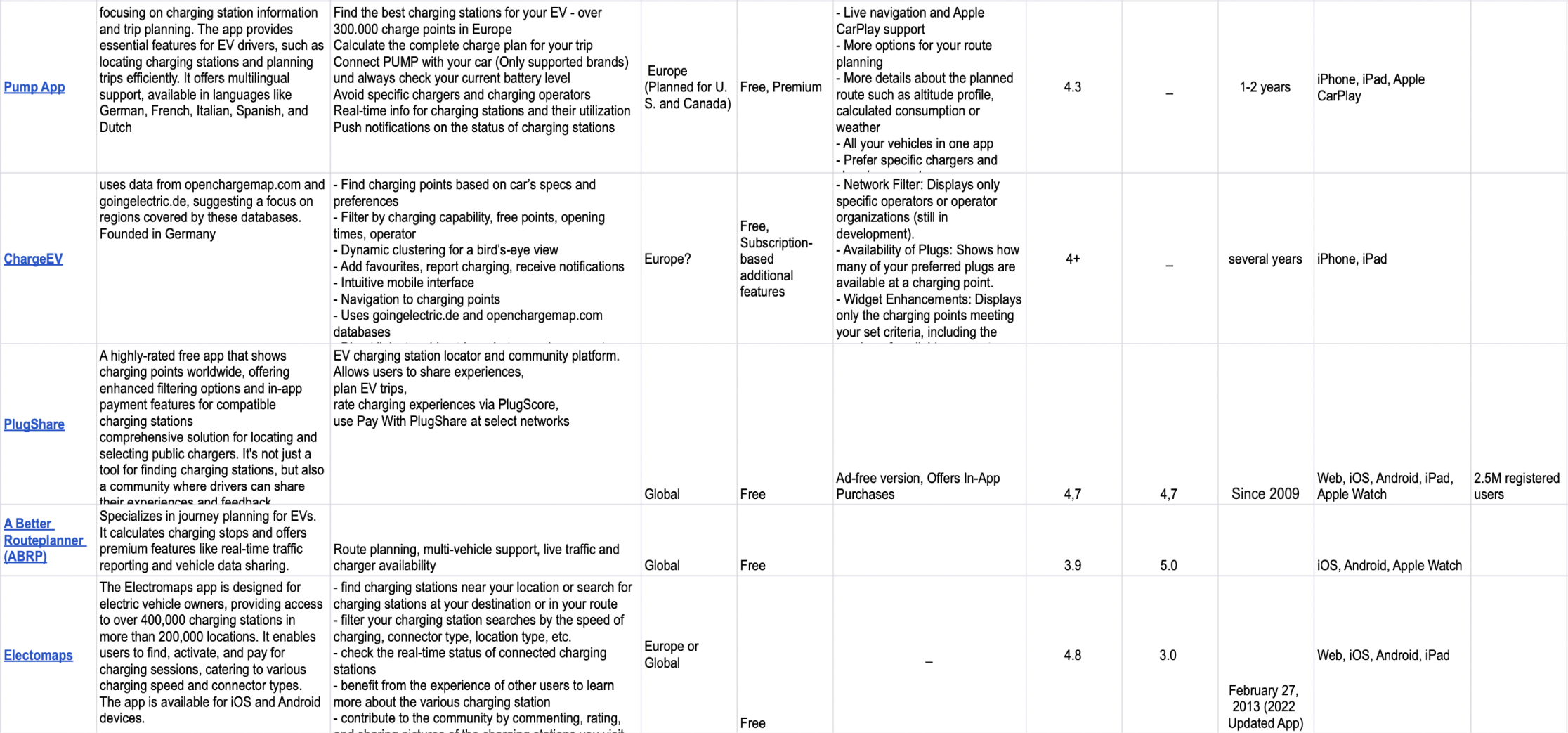
Next, I conducted a comprehensive competitor analysis to understand the EV charging app landscape. I identified key players in the market, evaluating their core features, user experience, and unique selling points. By examining user feedback and app reviews, I was able to pinpoint common pain points and areas where competitors were excelling or falling short.

III.

processing survey data

I conducted a detailed analysis of survey data from a study led by the CEO of WattBuddy in collaboration with Berkeley’s Haas School of Business, collecting responses from over 100 EV users. This research highlighted critical challenges faced by EV shoppers and owners, with insights supported by direct quotes from user interviews:

"This is anxiety inducing trying to find a charger next to a decent place to eat. It's enough frustration charging to make me never drive electric again."

"I still get really nervous about [public charging]. I typically find the exact place I want to go, and it's a utilitarian process. I don't even eat lunch while charging - it's just me sitting there at an L3 charger watching the kilowatts transfer."

"I wish I knew if the station was going to "load balance" down to 65 vs 150 kW. That's a big difference in waiting time. Can you tell in advance the real charging speed?"

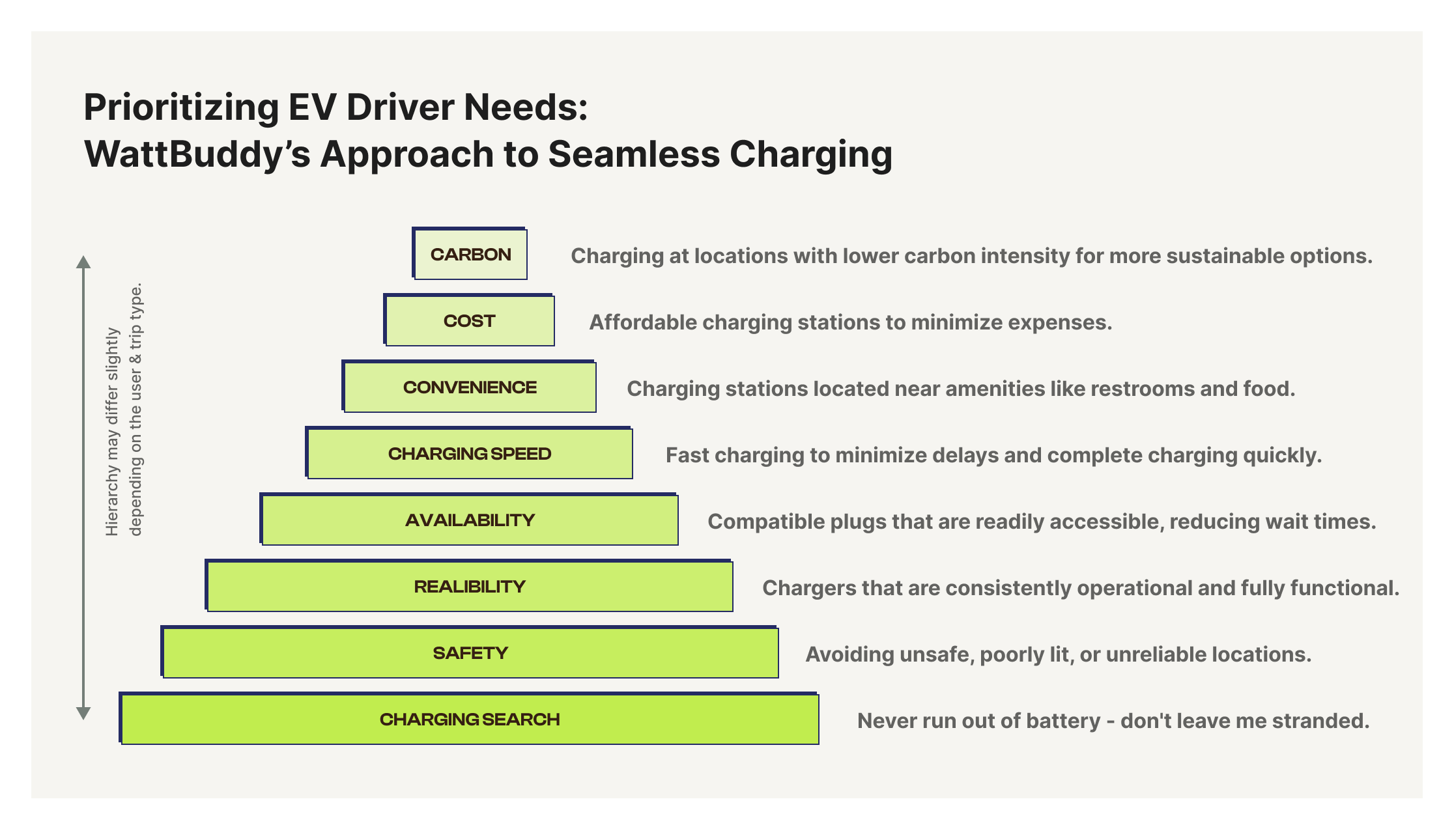
Through rigorous refinement of the data, I categorized findings into actionable themes and extracted key user insights. This process revealed a clear hierarchy of pressing user needs:

IV.

Job stories

When planning a charging session,

I want solutions that:
• help me identify the most affordable charging options.
• ensure charging fits seamlessly into my schedule with minimal waiting.
• offer environmentally conscious options to align with my sustainability goals.

When arriving at a charging station,

I want solutions that:
• guarantee the chargers are functional and reliable.
• reduce waiting times by showing real-time availability of charging spots.
• offer locations that provide additional comfort or services for a better experience.

I want solutions that:
• simplify the process of finding stations that meet my regular preferences, like reliability or proximity.
• provide a consistent and dependable charging experience.
• make it easy to plan charging stops with clear and transparent information.

When managing my everyday charging routine,

I want solutions that:
• help me avoid running out of battery by finding nearby stations quickly.
• ensure the locations I’m routed to are safe and trustworthy.
• include options with amenities like restrooms or food to make the stop more convenient.

When searching for a charging station during a trip,

research

03

wattbuddy

Connecting the Dots

insights

I.

Staying in the Car During Charging

Many drivers remain in their vehicles while recharging at public stations, often located behind shopping malls or in unfamiliar parking garages. These locations discourage them from exploring nearby stores, highlighting the need for a more engaging and convenient charging experience.

II.

Family Drivers Seek Meaningful Charging Experiences

EV drivers often plan long trips in advance, carefully considering battery range, station availability, and charging downtime. However, this process can be both stressful and time-consuming, especially for those new to electric vehicles.

III.

Pre-Trip Planning for Long-Distance Travel


EV drivers often plan long trips in advance, carefully considering battery range, station availability, and charging downtime. However, this process can be both stressful and time-consuming, especially for those new to electric vehicles.

IV.

The Growing Role of Integrated Ecosystems


EV drivers often plan long trips in advance, carefully considering battery range, station availability, and charging downtime. However, this process can be both stressful and time-consuming, especially for those new to electric vehicles.

04

wattbuddy

Form meets function

vision

Idea

WattBuddy doesn’t just guide - it anticipates. Our assistant seamlessly integrates telematics, real-time APIs, and user behavior insights to deliver a truly personalized and proactive EV charging and wayfinding experience. By predicting users’ needs, optimizing routes, and ensuring access to reliable charging options, WattBuddy transforms every journey into a stress-free, efficient, and delightful experience for EV drivers.

WattBuddy doesn’t just guide - it anticipates.

I.

Predictive Intelligence

WattBuddy uses advanced analytics to evaluate factors like battery health, weather conditions, and traffic patterns. Based on this data, it provides recommendations on where, when, and how to charge for optimal efficiency. This approach helps drivers make informed decisions, improving both convenience and energy management.

II.

Integrated Lifestyle Features

Seamlessly integrate charging stops with restaurant reservations, hotel bookings, and activity suggestions, crafting a cohesive and stress-free journey. WattBuddy leverages user reviews to empower better decisions, enhancing every step of your experience with delightful possibilities.

III.

Smart Charging & Predictive Maintenance

WattBuddy’s integration with car APIs transforms it into a complete EV assistant, designed to simplify and enhance every aspect of driving. Drivers can remotely control essential functions like starting or stopping charging, locking or unlocking the car, and scheduling low-cost charging from anywhere. Real-time updates on tire pressure, battery health, and range ensure the vehicle stays in top condition, while advanced features like demand-response program participation optimize energy use and costs. With built-in support for bidirectional energy sharing, WattBuddy prepares drivers for the future of EV technology, making smarter and more sustainable driving a reality.

04

wattbuddy

Driving Impact

results

After testing the pilot app and achieving a 98% success rate in locating available EV charging stations, we encountered a few key challenges.

First, there’s the issue of unavailable charging points. While the app helped drivers find stations, many were out of service, leaving drivers stranded and frustrated.

Second, Tesla users faced connection issues, especially following system updates, making it difficult to connect to certain charging stations.

Lastly, support for charging stations wasn’t ideal. Drivers struggled to report issues, leading to long wait times and poor experiences with customer service.

Despite our progress in improving the charging experience, the EV ecosystem still faces critical challenges. It’s not just about individual apps or networks - it’s about the need for a collective effort to create a seamless, reliable charging experience for all EV drivers.

Collaboration is key to driving meaningful change. By working together with charging networks, we can address these issues more effectively. Partnerships will help implement solutions that benefit everyone, rather than operating in silos.

Feedback Collection

Tracking satisfaction across multiple platforms, reducing the need to check separate review sites like Plugshare or Google Reviews.

Live Error Resolution

Integrating with CPMS to handle errors in real-time, eliminating the need for human intervention.

Service Recovery

Enabling drivers to quickly locate functional stations nearby, reducing the need to wait on hold with call centers.

Automated Issue Reporting

Making it easier for drivers to report problems, allowing Field Operations teams to address issues faster.

Troubleshooting across Platforms

Helping drivers resolve charge start and payment issues, regardless of the app they’re using or their language.

To address these challenges, we’re proposing several solutions:

So far, WattBuddy has garnered interest from nearly 300 companies as potential partners, and this was a significant factor in raising $1.5 million in initial investments.

06

wattbuddy

Proving the Hypothesis

what's next

The app is set to launch on the App Store and Google Play this spring, showcasing its current functionality.Meanwhile, the team is actively working on exciting new features. One of the highlights is an AI voice assistant designed to handle complex requests like: "Find me an available DC fast charger >100 kW on my route to Incline Village, NV around noon. I want to stop for lunch in Truckee, CA, so look for restaurants within a 10-minute walk and make a reservation for 6."Additionally, the team is developing real-time CO2 savings statistics, enabling users to make smarter and more eco-conscious charging decisions.